
The first Boston album was the biggest selling debut for 9 years, until Whitney Houston came along.
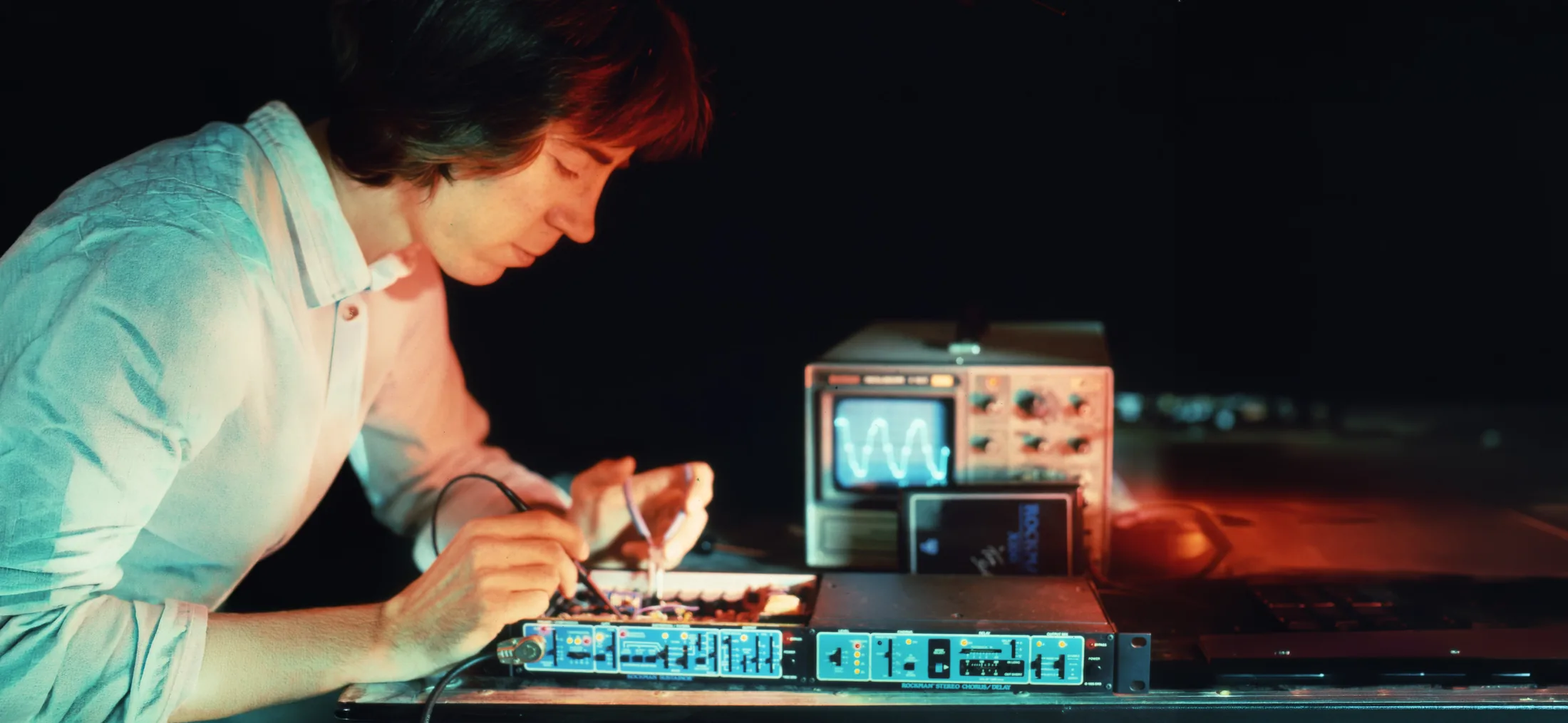
The fact that Tom Scholz recorded BOSTON in his basement created a billion dollar industry to supply “prosumer” recording equipment to millions of aspiring musicians who couldn’t afford the $200 per hour rates at a normal recording studio.
The Volume Problem
Throughout the 1970s, Scholz became known for spending countless hours in his basement recording studio, where he experimented with electronic circuits, amplifier modifications, and recording techniques. His goal was to achieve the highly polished guitar sounds heard on Boston’s debut album while eliminating the inconsistencies associated with loud tube amplifiers, microphones, and room acoustics.
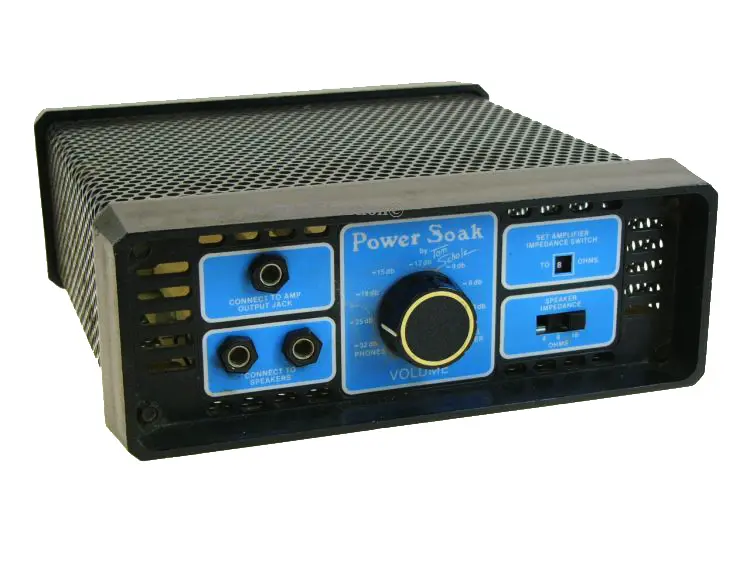
Traditional guitar amps at the time required the player to turn up the volume to 10 to get the sound of modern rock. In an arena or large gymnasium, that was fine — but smaller venues or recording studios couldn’t deal with that glass-breaking kind of volume. Tom’s solution? He invented and manufactured the Power Soak: a simple device that reduced the voltage from an amplifier on its way to speaker cabinets. But all of the extra equipment to modify the sound of those tube amplifiers was quite a pile of heavy gear.
A Device the Size of a Sandwich
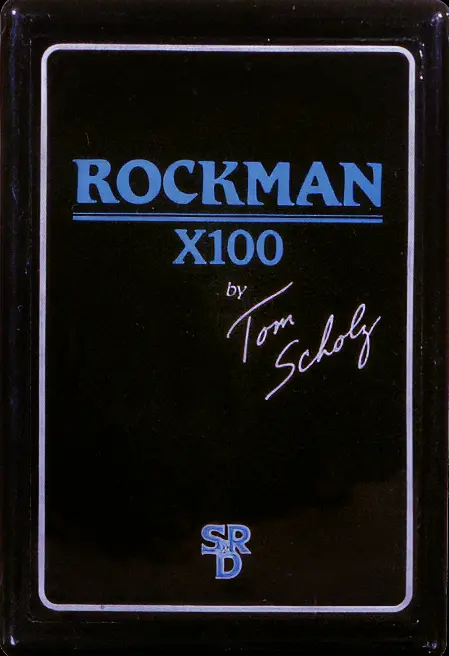
The Rockman, introduced in 1982, replaced all of that equipment with a device the size of a sandwich. Although marketed as a portable headphone amplifier, it was actually an integrated analog signal-processing system. Unlike conventional practice amplifiers, the Rockman combined several processing stages into a single carefully balanced design.
The guitar signal first passed through an active input stage that preserved high-frequency response while minimizing noise. It then entered a sophisticated compression circuit that dramatically reduced dynamic range. This heavy compression became one of the Rockman’s defining characteristics, increasing sustain while keeping clean passages full and articulate.
Amp Modeling, 30 Years before it had a name
Perhaps the most innovative aspect of the Rockman was its analog speaker simulation. Traditional direct recording often produced harsh, brittle tones, because electric guitar speakers naturally roll off high frequencies and shape the amplifier’s output. Scholz designed complex filtering networks that duplicated these frequency characteristics electronically.
Instead of requiring a loud cabinet and microphone, the Rockman produced a signal that already sounded like a professionally miked amplifier. This allowed guitarists to plug directly into recording consoles with remarkably realistic results. Tom had created Amp Modeling about 30 years before that term was ever used.
From Alabama to ZZ Top
Other musicians and recording studios found the Rockman the perfect solution to achieving world class guitar tones that could be carried in your pocket. The number and variety of hit records to use a Rockman is amazing. Bands from A to Z — Alabama to ZZ Top — were making hit records with, and praising, the Rockman.
Joe Satriani and Def Leppard sent Gold Records to Tom as recognition of his formidable invention.
On the Road
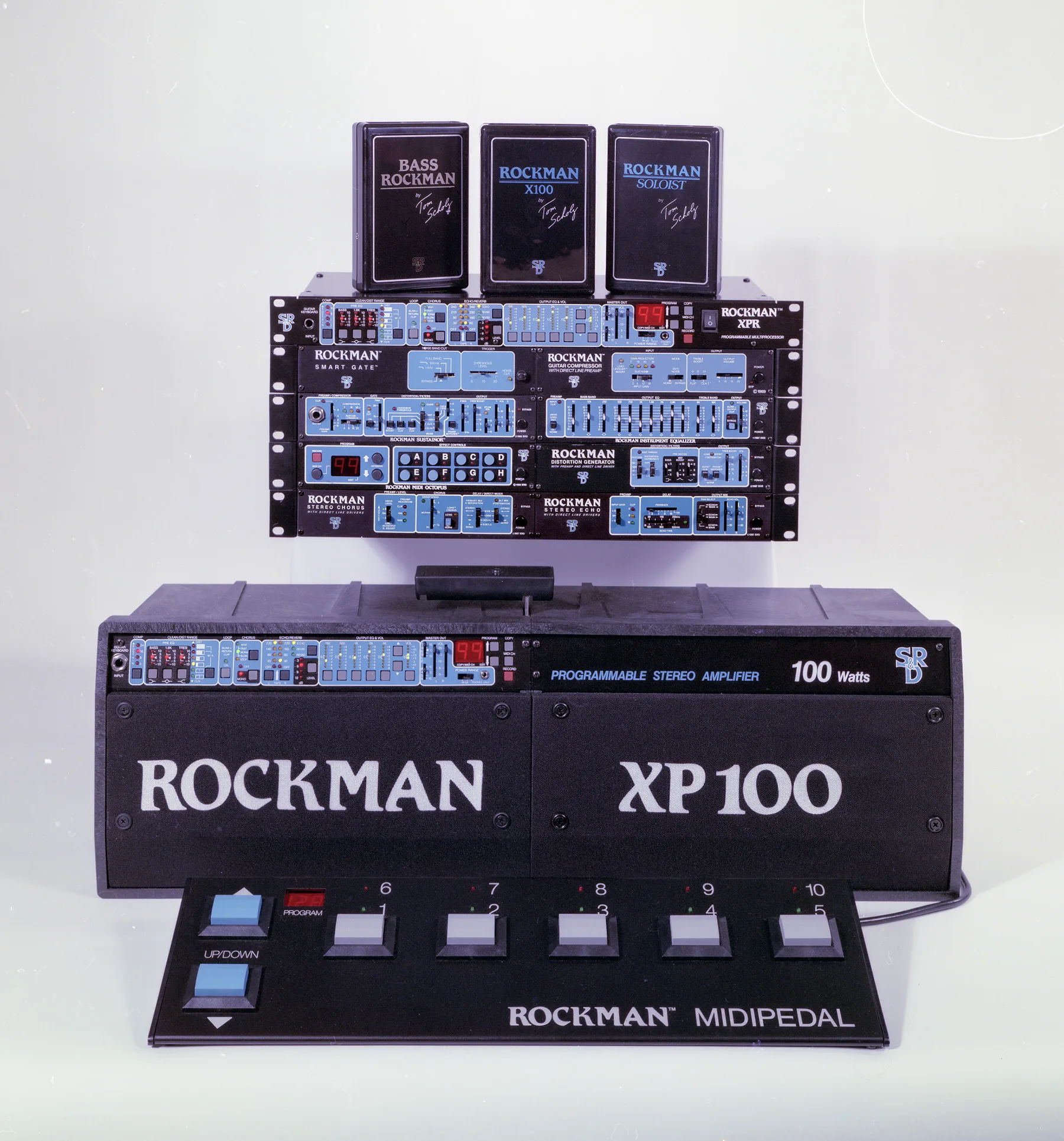
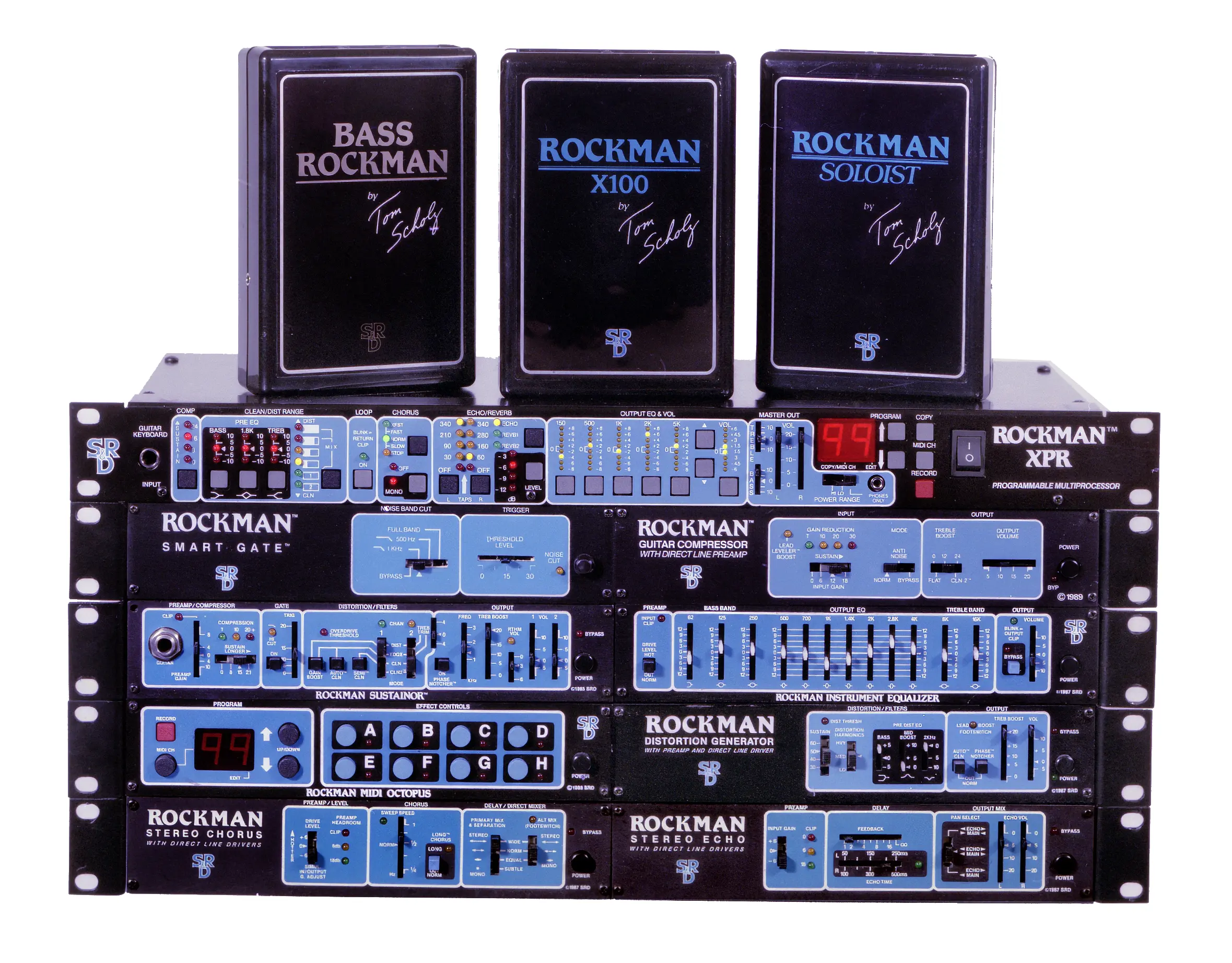
Tom’s next step was to manufacture a road-worthy set of Rockman “Rockmodules” that could be rack mounted and toured across the country. Boston and other artists still use those Rockmodules as their touring gear.